
Slate Cleaning and Sealing Las Vegas — Deep Cleaning, Color Restoration & Sealing Service
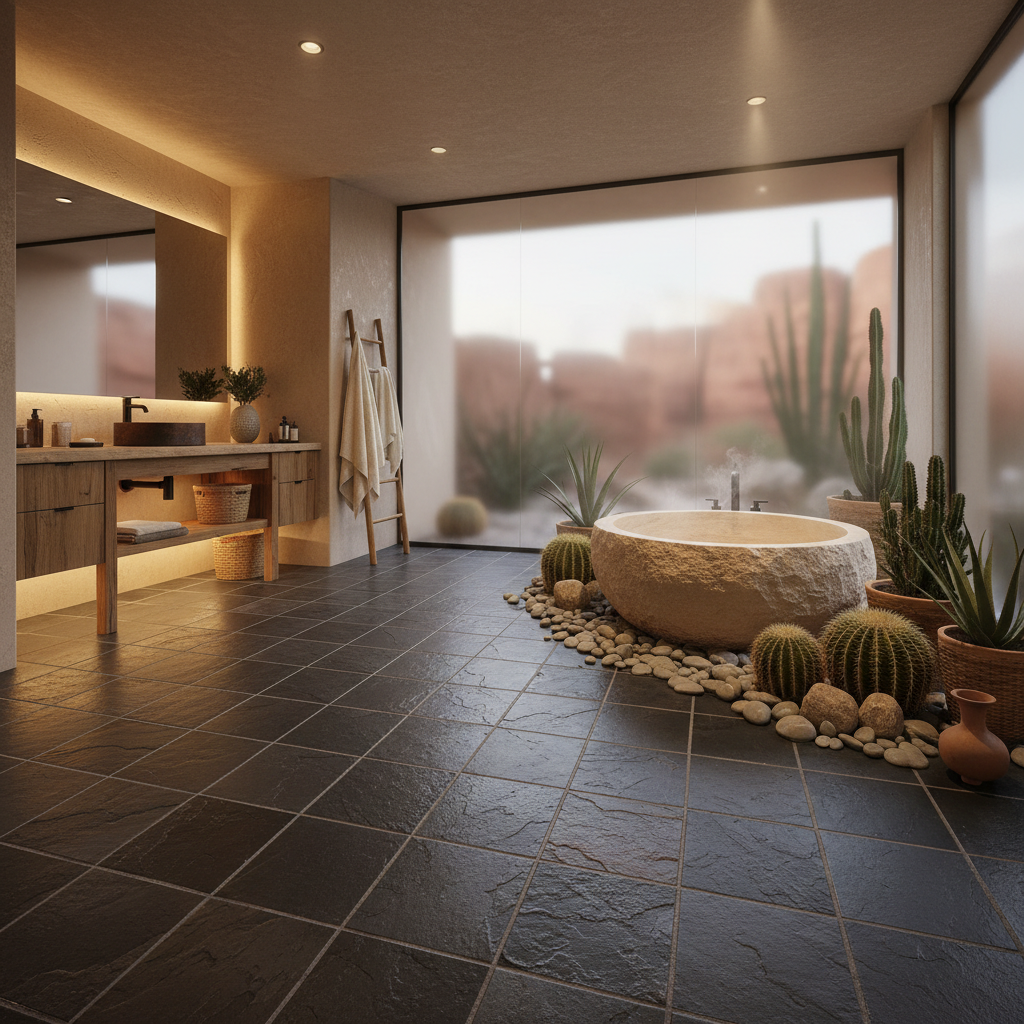
Our slate cleaning and sealing service uses professional extraction equipment to pull embedded dirt and hard water minerals from slate's naturally textured surface, then applies a color-enhancing penetrating sealer that restores the rich, deep tones faded slate loses over time. Part of the Las Vegas Valley's most experienced stone restoration team, we schedule slate cleaning and sealing appointments same-week throughout the valley — completed in one visit with same-day use for most residential installations.
Quick Reference — Slate Cleaning and Sealing Las Vegas
- • Slate cleaning and sealing starting at $4/sqft
- • Color-enhancing sealers that restore deep, rich slate tones
- • Hard water mineral removal specific to Las Vegas (278 ppm)
- • Chip, flake, and grout repair available same visit
- • Same-week scheduling throughout the Las Vegas Valley
- • 20+ years experience • Family-owned • 5-star rated
- • 30-day sealer guarantee on every application
- • Free in-home estimates: (702) 809-8436
What Our Slate Cleaning and Sealing Service Includes
Slate's naturally textured, cleft surface traps dirt and minerals that ordinary mopping cannot reach. Our slate cleaning service goes beyond the surface — professional equipment extracts embedded material from within the stone's texture and pores, cleaning from the inside out.
A standard slate cleaning and sealing service visit includes:
- Sealer assessment — water drop test to confirm whether existing sealer is functional or has failed
- Deep extraction cleaning — professional equipment pulls embedded dirt, minerals, and old cleaning residue from the textured surface and pores
- Hard water mineral treatment — stone-safe mineral removers dissolve calcium deposits without damaging slate's layered structure
- Grout cleaning — high-pressure grout cleaning to restore original grout color between slate tiles
- Stain treatment — targeted treatment for oil, organic, and rust stains
- Sealer application — color-enhancing or standard penetrating sealer applied with 30-day guarantee
Add-on services available with any slate cleaning visit: chip and flake repair ($150–$300 per area), grout repair ($2–$4/sqft), and diamond polishing for honed slate. Call (702) 809-8436 to discuss your slate's specific condition.
Our Slate Services
| Service | What's Involved | Starting Price |
|---|---|---|
| Deep cleaning | Professional extraction to remove embedded dirt from textured surface | $4–$6/sqft |
| Cleaning + sealing | Deep cleaning followed by penetrating sealer application | $4–$10/sqft |
| Slate polishing | Diamond polishing to enhance natural sheen (cleft or honed finish) | $5–$10/sqft |
| Color enhancement | Color-enhancing sealer to deepen and restore faded natural colors | $3–$6/sqft |
| Chip and flake repair | Epoxy repair of damaged areas, blended with surrounding stone | $150–$300 per area |
| Grout repair | Replacement of crumbling or discolored grout between slate tiles | $2–$4/sqft |
| Sealing (standalone) | Penetrating sealer with 30-day guarantee | $0.50–$2/sqft |
Slate Restoration Near Me — Las Vegas Valley
Slate restoration goes beyond routine cleaning — it reverses years of mineral buildup, surface dulling, spalling, and finish deterioration to return slate to its original rich, layered appearance. Las Vegas slate installations develop restoration needs faster than in other climates due to the valley's extreme heat cycling and 278 ppm hard water.
The most common slate restoration scenarios we see in Las Vegas homes:
- Slate that looks permanently grey and flat — hard water mineral deposits have built up in the textured surface over years, obscuring the stone's natural color variation
- Outdoor slate patios bleached by UV exposure and roughened by mineral scale from pool splash and irrigation
- Entryways and mudrooms with dark, embedded traffic grime that cleaning alone can't remove
- Bathroom slate with white efflorescence pushed to the surface by moisture migrating through the installation
- Slate where old topical sealers have yellowed, peeled, or trapped dirt against the surface
Restoration typically combines deep cleaning, chip/flake repair, and fresh sealing — often in a single visit. For floors with more severe finish wear, diamond polishing to a honed finish is added. Call (702) 809-8436 for a free slate restoration assessment anywhere in the Las Vegas Valley.
Common Slate Problems We Solve
- Faded, dull appearance — slate loses its rich color depth over time without proper sealing
- Embedded dirt trapped in the naturally textured surface that mopping can't reach
- White mineral deposits from hard water buildup on the surface and in pores
- Flaking and chipping along the natural cleavage planes (called spalling)
- Failed or yellowed sealers that make slate look cloudy or discolored
- Crumbling grout between slate tiles from age and moisture exposure
- Efflorescence — white crystalline deposits pushed to the surface by moisture migrating through the stone
Understanding Slate Finishes
- Natural Cleft (Textured)
- The stone's natural split surface with ridges and texture. Most common for floor installations. Provides excellent slip resistance. Requires careful cleaning to remove dirt from crevices.
- Honed (Smooth)
- Machine-ground to a smooth, matte finish. Easier to clean than natural cleft. Shows the stone's color and pattern more clearly. Less slip-resistant when wet.
- Gauged
- The back of the tile is ground to a uniform thickness for easier installation while the front retains its natural cleft texture. Most modern slate tile is gauged.
Slate Sealing Las Vegas — Essential for Color and Protection
Unsealed slate looks faded and flat — it loses the rich, deep colors that make it so attractive. A quality sealer restores and protects those colors while preventing stain and moisture absorption. In Las Vegas, where hard water deposits accumulate faster than anywhere else in the country, sealing is the single most important maintenance step for slate.
Sealer Options for Slate
| Sealer Type | Effect | Best For | Longevity |
|---|---|---|---|
| Penetrating (natural look) | Protects without changing appearance | Slate you want to keep natural-looking | 2–3 years |
| Color-enhancing penetrating | Deepens natural colors (wet look) | Faded slate that needs color restoration | 2–4 years |
| Topical matte | Surface coating with matte finish | Indoor slate in low-traffic areas | 1–2 years |
| Topical gloss | Surface coating with glossy finish | Decorative accent walls, low-traffic areas | 1–2 years |
Most popular choice: Color-enhancing penetrating sealer. It brings back the rich, deep tones of fresh slate while providing invisible protection. The stone looks like it was just quarried.
Sealing Frequency for Las Vegas Slate
- Indoor floors: Every 1–2 years
- Bathroom floors: Every 1 year
- Outdoor patios: Every 1 year
- Countertops: Every 1–2 years
Use the water drop test to check: if water absorbs within 10 minutes, reseal. Full guide: How often to seal natural stone floors
Las Vegas Hard Water and Slate
Las Vegas tap water at 278 ppm is among the hardest in the country. Slate's naturally textured, cleft surface has far more surface area than polished stone — and that means far more mineral contact points with every mopping or splash. Hard water deposits build up in slate's ridges and crevices faster than on smooth stone surfaces, creating a white, dusty buildup that makes slate look perpetually dirty even after cleaning.
Professional extraction cleaning with stone-safe mineral removers dissolves these deposits at the source. Regular sealing — every 1–2 years — reduces mineral absorption between professional services. Annual professional cleaning is our recommendation for most Las Vegas slate installations, particularly in bathrooms, kitchens, and outdoor areas with direct water exposure.
Las Vegas Communities We Serve
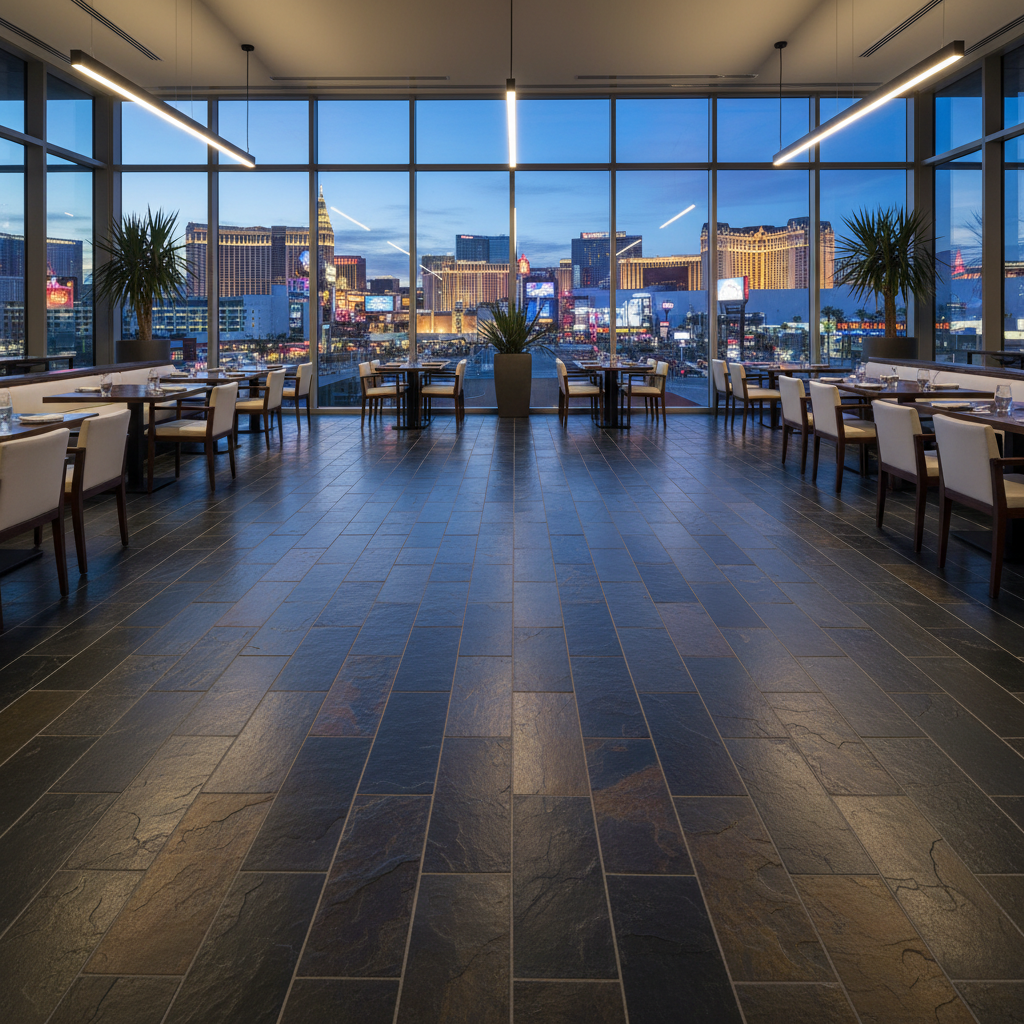
Our slate cleaning and sealing service covers every community in the Las Vegas Valley:
- Las Vegas — all zip codes including the Strip corridor, Spring Valley, and Downtown
- Henderson — Green Valley, Anthem, Seven Hills, MacDonald Highlands, Lake Las Vegas
- Summerlin — The Ridges, The Paseos, Tournament Hills, Red Rock Country Club, Sun City
- Centennial Hills — Providence, Skye Canyon, Elkhorn Springs
- North Las Vegas — Aliante, Eldorado, Valley Vista
- Spring Valley — Warm Springs, Southwest Las Vegas
- Paradise — University District, Whitney, eastern Las Vegas Valley
- Lone Mountain, Red Rock, Sun City, Boulder City
Slate Care Between Professional Services
Daily
- Sweep or dust mop to remove grit from the textured surface
- Use a soft-bristle broom for natural cleft slate (microfiber can snag on rough texture)
Weekly
- Damp mop with pH-neutral stone cleaner
- For natural cleft slate, use a soft scrub brush to clean dirt from texture crevices
- Dry after cleaning to prevent hard water mineral deposits
What to Avoid
- Acidic cleaners (vinegar, citrus-based products) — degrades sealers and can etch some slate varieties
- Harsh alkaline cleaners and degreasers
- Stiff wire brushes (can damage the layered surface structure)
- Wax-based products (build up in the textured surface and attract dirt)
- Steam mops — concentrated heat and moisture damages sealers
Restoration vs Replacement
| Option | Cost Per Sq Ft | 300 Sq Ft Area | Timeline |
|---|---|---|---|
| Professional restoration | $4–$10 | $1,200–$3,000 | 1–2 days |
| Slate tile replacement | $15–$30 | $4,500–$9,000 | 1–2 weeks |
Restoration saves 55–80% compared to replacement. Full analysis: Stone restoration vs replacement cost guide
Frequently Asked Questions
Q: What does a professional slate cleaning and sealing service include?
A: Our slate cleaning and sealing service includes deep extraction cleaning, hard water mineral treatment, grout cleaning, stain treatment, and application of a professional penetrating or color-enhancing sealer backed by a 30-day guarantee. Add-on services include chip/flake repair and grout repair. Call (702) 809-8436 for a free in-home estimate.
Q: Is there slate restoration near me in Las Vegas?
A: Yes. Night and Day Stone Restoration provides slate cleaning, sealing, and restoration throughout Las Vegas, Henderson, Summerlin, Centennial Hills, North Las Vegas, Spring Valley, and all Clark County communities. Same-week scheduling is typically available. Call (702) 809-8436.
Q: How much does slate tile cleaning and sealing cost?
A: Professional slate tile cleaning and sealing costs $4–$10 per square foot combined. Deep cleaning alone starts at $4/sqft. Adding a color-enhancing penetrating sealer runs $4–$10/sqft total. Standalone sealing is $0.50–$2/sqft. Free written estimates — call (702) 809-8436.
Q: How often should slate tile be cleaned and sealed in Las Vegas?
A: Every 1–2 years for indoor floors, annually for bathrooms and outdoor patios. Las Vegas hard water at 278 ppm accelerates mineral buildup in slate's textured surface, so annual professional cleaning is our recommendation for most installations. The water drop test checks sealer status in 30 seconds — if water absorbs within 10 minutes, it's time. See our complete sealing frequency guide.
Q: How do you restore faded slate tile color?
A: A color-enhancing penetrating sealer is the most effective way to restore faded slate — it soaks into the stone and deepens the natural color tones like a permanent "wet look." Professional deep cleaning before sealing removes embedded dirt and failed sealers so the new sealer bonds properly and delivers maximum color restoration.
Q: Can flaking or chipping slate tile be repaired?
A: Yes. Minor flaking (spalling) along natural cleavage planes can be stabilized with color-matched epoxy at $150–$300 per area. Chips are filled, shaped, and blended with the surrounding surface. Severe flaking across multiple tiles may indicate moisture issues that should be assessed before sealing.
Q: What is the best sealer for slate tile floors?
A: For most Las Vegas slate floors, a color-enhancing penetrating sealer is the best choice — it deepens and restores natural color while protecting against stains and moisture without forming a surface film that can peel. It lasts 2–4 years. For slate where you want to preserve the exact natural look, a standard penetrating sealer is the right call.
Q: Is slate tile good for Las Vegas homes?
A: Yes. Slate is one of the most durable stones for Las Vegas conditions — naturally slip-resistant, fireproof, and frost-resistant. Its main challenge here is hard water mineral buildup in the textured surface. Annual professional cleaning and sealing handles this effectively, keeping slate looking rich and protecting it from the desert environment.
Q: Can slate tile be polished to a high gloss?
A: Slate can be honed to a smooth finish but a true mirror-gloss like marble is difficult due to slate's layered mineral composition. Most slate owners prefer the honed or natural cleft finish that showcases the stone's unique character. For high-gloss natural stone flooring, see our marble polishing service.
Q: Can I clean slate tile myself between professional services?
A: Yes. Between professional visits, sweep or dust mop daily and damp mop weekly with a pH-neutral stone cleaner. Never use vinegar, citrus-based products, bleach, ammonia, steam mops, or general-purpose floor cleaners on slate — these degrade sealers and can damage the stone's layered surface.
Related Stone Restoration Services
- Travertine cleaning, sealing & restoration — deep cleaning and color-enhancing sealing for travertine floors and countertops
- Marble polishing & restoration — diamond honing and polishing to restore marble floors to mirror finish
- Limestone cleaning & polishing — professional restoration for this soft, porous calcite stone
Schedule Your Slate Cleaning and Sealing Service
Night and Day Stone Restoration — 20+ years of slate cleaning, sealing, and restoration throughout Las Vegas. Family-owned. 5-star rated. 30-day sealer guarantee on every application.
Call (702) 809-8436 for a free slate assessment.
Se habla espanol: (702) 764-1528