
How to Remove Hard Water Stains from Natural Stone Floors in Las Vegas [Expert Guide]
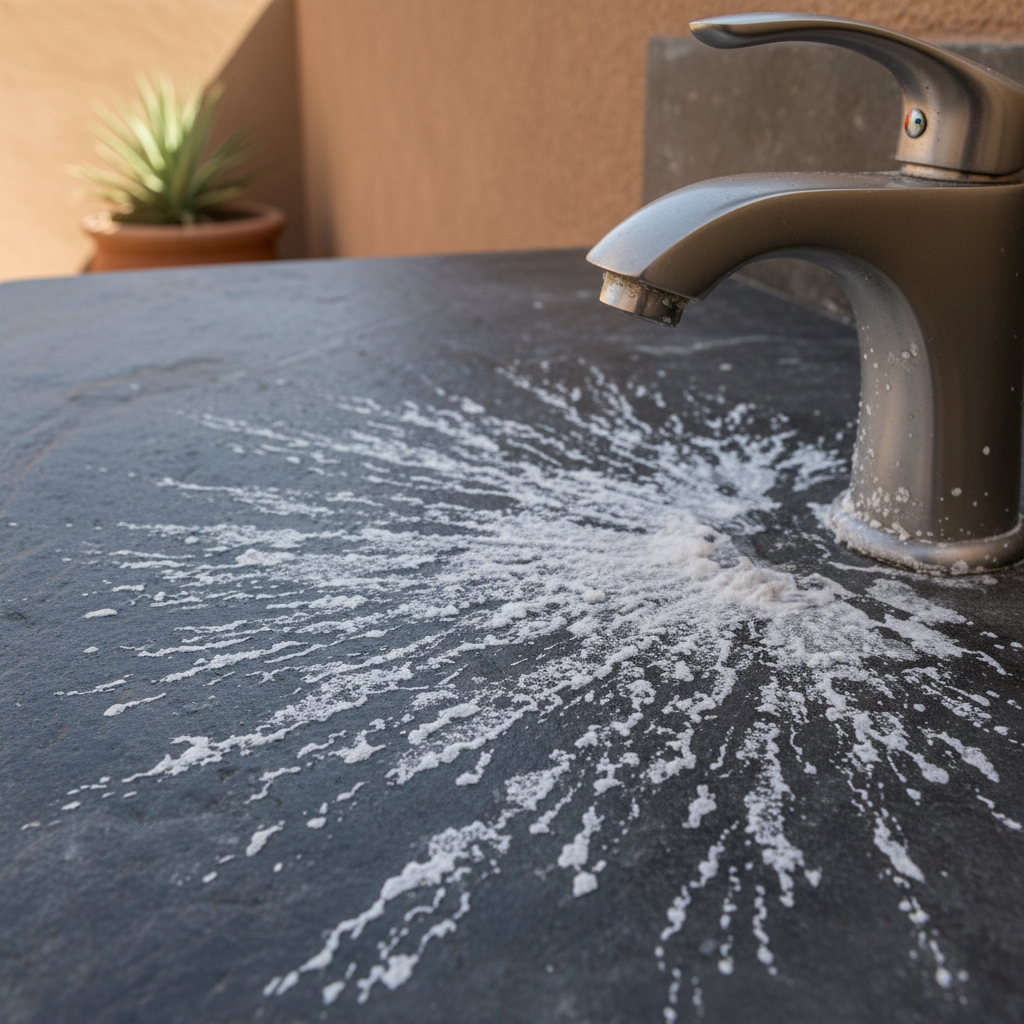
If you live in the Las Vegas Valley, you've almost certainly noticed white, cloudy spots forming on your natural stone floors. That's hard water doing what it does best — leaving calcium and magnesium deposits behind every time water touches your stone and evaporates.
Las Vegas water measures around 278 parts per million in hardness, more than double the national average. For natural stone owners, this means mineral buildup is not a question of if, but when.
The good news is that most hard water stains can be removed safely if you know what you're doing. The bad news is that using the wrong product can cause permanent damage that's far worse than the original stain. This guide walks you through the safe approach for every stone type.
Understanding Hard Water Damage on Natural Stone
Not all stone reacts to hard water the same way. Understanding your stone type is the first step to treating it safely.
Calcium-Based Stones (Most Vulnerable)
Marble, travertine, and limestone are calcium-based stones. They're naturally porous and soft compared to other stone types, which makes them especially vulnerable to hard water damage.
Hard water minerals don't just sit on the surface of these stones. They seep into the tiny pores, building up below the surface over time. This makes them progressively harder to remove the longer they're left untreated.
These stones are also highly sensitive to acidic cleaners. Products that dissolve mineral deposits (like vinegar, CLR, or Lime-Away) also dissolve the stone itself, creating a different kind of damage called etching — dull, rough patches that are permanent without professional polishing.
Silicate-Based Stones (More Resilient)
Granite and slate are silicate-based stones. They're denser, less porous, and more resistant to both hard water penetration and chemical damage.
Hard water deposits on granite and slate tend to sit more on the surface rather than soaking in. This generally makes them easier to remove with standard cleaning methods.
Engineered Stone
Quartz countertops and surfaces are non-porous, so hard water deposits stay entirely on the surface. They're the easiest to clean but can still develop visible buildup in wet areas.
How to Remove Hard Water Stains by Severity
Level 1: Light Mineral Film (Recent Buildup)
What it looks like: A slightly cloudy or hazy film, most noticeable when light hits the surface at an angle. The stone's color looks muted compared to when it was clean.
What you need:
- pH-neutral stone cleaner (not regular floor cleaner)
- Soft microfiber cloth or non-abrasive pad
- Clean water for rinsing
- Dry microfiber cloth
The process:
- Apply pH-neutral stone cleaner directly to the affected area
- Let it sit for three to five minutes to loosen the mineral deposits
- Gently scrub with a soft cloth or non-abrasive pad in circular motions
- Rinse thoroughly with clean water — this is important because leaving cleaner residue behind attracts new deposits
- Dry the surface completely with a clean microfiber cloth
Works on: All stone types. This should be your first attempt regardless of the stone.
Level 2: Moderate White Deposits (Weeks to Months of Buildup)
What it looks like: Visible white, chalky spots or patches. You can feel a slight texture difference when you run your hand across the deposit compared to clean stone.
What you need:
- Plastic scraper (never metal on stone)
- pH-neutral stone cleaner or stone-safe mineral deposit remover
- 0000-grade (extra fine) steel wool (for granite and slate only)
- Soft nylon brush
- Clean water and microfiber cloths
For marble, travertine, and limestone:
- Gently scrape the bulk of the deposit with a plastic scraper, holding it at a low angle to avoid gouging
- Apply a stone-safe mineral deposit remover (look for products specifically labeled safe for calcium-based stones)
- Let it dwell for the recommended time on the product label
- Scrub gently with a soft nylon brush
- Rinse thoroughly and dry completely
- Repeat if needed — stubborn deposits often require two to three applications
For granite and slate:
- Scrape loose deposits with a plastic scraper
- Apply stone-safe mineral deposit remover
- For stubborn spots, gently buff with 0000-grade steel wool in small circular motions with very light pressure
- Rinse and dry completely
Important: Do not use steel wool on marble, travertine, or limestone unless it is specifically 0000-grade (extra fine) and you use extremely light pressure. When in doubt, skip the steel wool and repeat the chemical application instead.
Level 3: Heavy Mineral Crust (Months to Years of Buildup)
What it looks like: Thick, white, crusty deposits that feel rough to the touch. The stone underneath may be discolored or dull even in areas without visible mineral buildup.
The honest truth: Heavy mineral buildup that has accumulated over months or years is very difficult to fully remove with home methods. You can reduce it, but completely eliminating it usually requires professional diamond honing, which physically removes the damaged surface layer to reveal fresh stone underneath.
What you can try at home:
- Use a plastic scraper to remove as much of the thick crust as possible
- Apply a stone-safe poultice (a paste that draws stains out of porous stone):
- Mix baking soda with just enough water to form a thick paste
- Apply a half-inch layer over the stained area
- Cover with plastic wrap and tape the edges
- Leave for 24 to 48 hours
- Remove the plastic wrap and let the poultice dry completely
- Scrape off the dried poultice with a plastic scraper
- Rinse and assess — repeat if you see improvement
- If the poultice method reduces but doesn't eliminate the staining, it's time for professional help
When to call a professional:
- The deposits cover large areas (entire rooms, hallways)
- Home methods have reduced but not eliminated the buildup
- The stone is dull or damaged underneath the deposits
- You're not sure what type of stone you have and don't want to risk damage
Professional marble and stone floor restoration removes hard water damage completely and restores the stone to like-new condition.
Products That Will Damage Your Stone
This is critical. Using the wrong product on natural stone can cause permanent damage that's more expensive to fix than the hard water stains you were trying to remove.
Never Use on Any Natural Stone
- Vinegar — Acidic, etches marble, travertine, and limestone on contact
- Lemon juice — Same problem as vinegar
- CLR (Calcium, Lime, Rust remover) — Dissolves calcium-based stones
- Lime-Away — Highly acidic, damages all polished stone
- Bleach — Breaks down sealers and can discolor stone
- Ammonia — Degrades sealers over time
- Lysol or bathroom spray cleaners — Most are too acidic or alkaline
- Magic Eraser / melamine foam — Abrasive, acts like fine sandpaper on polished surfaces
Never Use on Marble, Travertine, or Limestone Specifically
- Any product containing acid (check ingredients for citric acid, phosphoric acid, hydrochloric acid)
- Abrasive scrub pads (anything rougher than a soft nylon brush)
- Scouring powders like Comet or Bar Keeper's Friend (the original formula — they make a stone-safe version)
Safe to Use
- pH-neutral stone cleaners (available at home improvement stores, typically $8-$15)
- Stone-specific mineral deposit removers (check that the label specifically says safe for your stone type)
- Baking soda paste (mildly alkaline, safe for all stone types)
- Hydrogen peroxide 3% solution (safe for organic stains on light stone)
- Distilled water (prevents adding more minerals during the cleaning process)
Preventing Hard Water Stains in Las Vegas
Removal is one thing, but prevention saves you time, money, and frustration. Here's how to minimize hard water buildup on your stone floors.
Seal Your Stone Properly
A quality penetrating sealer fills the stone's pores and creates a barrier that slows mineral absorption. It's the single most effective prevention measure.
- Marble, travertine, limestone: Seal every one to two years in Las Vegas
- Granite, slate: Seal every two to three years
- Use the water drop test to check: sprinkle water on the stone and wait five minutes. If it absorbs and darkens the stone, it's time to reseal.
For professional sealing with a 30-day guarantee, see our travertine cleaning and sealing services.
Dry Wet Areas Promptly
The mineral deposits form when water evaporates on the stone surface. The simple habit of wiping up standing water — especially in bathrooms and kitchens — prevents most buildup from happening.
Keep a microfiber cloth near bathroom sinks and kitchen counters. A quick wipe after use takes five seconds and prevents deposits that take an hour to scrub off later.
Use Distilled Water for Cleaning
This might sound excessive, but if you're mopping stone floors with Las Vegas tap water, you're spreading mineral-laden water across the entire surface. Using distilled or filtered water for your weekly mopping prevents you from creating the very deposits you're trying to avoid.
At minimum, always dry-mop after wet mopping to remove any standing water before it evaporates.
Consider a Whole-House Water Softener
A water softener removes the calcium and magnesium from your water supply before it ever touches your stone. This is the most effective long-term prevention, though it's also the most expensive option ($1,000-$3,000 installed). If you have extensive natural stone throughout your home, a water softener can pay for itself by reducing maintenance costs and extending time between professional restorations.
Place Mats Strategically
Use mats near exterior doors to catch desert grit, and bath mats near showers and tubs. The combination of grit and hard water is especially damaging — the minerals weaken the surface while the grit scratches through it.
Room-by-Room Hard Water Prevention
Bathrooms (Highest Risk)
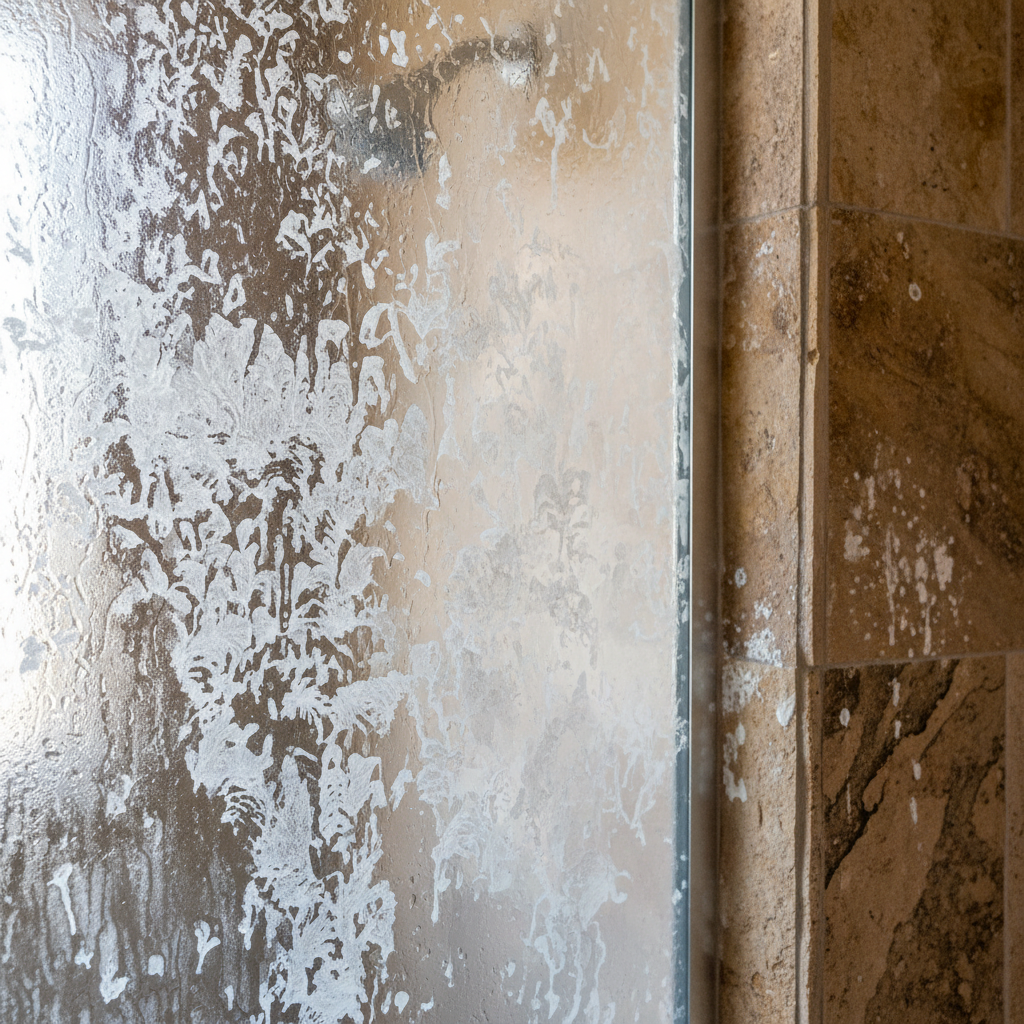
Bathrooms get the most water exposure. Shower floors, tub surrounds, and areas around sinks are prime targets for mineral buildup.
- Squeegee shower walls and floors after every use
- Wipe vanity counters after brushing teeth or washing hands
- Run the bathroom exhaust fan to reduce humidity and moisture
- Check sealer condition every six months with the water drop test
Kitchens
Areas around the sink and dishwasher are most vulnerable.
- Wipe counters and floor areas around the sink daily
- Clean up splashes from cooking and dishwashing promptly
- Consider a small under-sink water filter if you're not ready for a whole-house softener
Entryways
Las Vegas rain is rare but intense during monsoon season. When it happens, wet shoes track mineral-rich water across entryway stone.
- Use absorbent door mats both inside and outside
- Wipe up tracked-in water during rainy weather
- This area benefits from more frequent sealing (annually)
Outdoor Stone (Patios, Pool Decks)
Outdoor travertine and stone around pools are constantly exposed to hard water from irrigation, rain, and pool splash.
- Seal outdoor stone annually
- Pressure wash periodically with plain water
- Have outdoor stone professionally cleaned and resealed annually
Stone-Specific Hard Water Care Quick Reference
| Stone Type | Vulnerability | Safe Removal Methods | Avoid | Seal Frequency |
|---|---|---|---|---|
| Marble | Very High | pH-neutral cleaner, baking soda poultice, soft nylon brush | All acids, abrasives, steel wool | Every 1-2 years |
| Travertine | Very High | pH-neutral cleaner, poultice, soft brush | All acids, abrasives | Every 1-2 years |
| Limestone | Very High | pH-neutral cleaner, poultice, soft brush | All acids, abrasives | Every 1-2 years |
| Granite | Moderate | pH-neutral cleaner, 0000 steel wool (gentle), stone-safe remover | Harsh acids | Every 2-3 years |
| Slate | Moderate | pH-neutral cleaner, 0000 steel wool (gentle), soft brush | Harsh acids | Every 2-3 years |
| Quartz | Low | pH-neutral cleaner, plastic scraper, soft cloth | Abrasive pads | None needed |
Frequently Asked Questions
Can vinegar remove hard water stains from marble?
No. While vinegar dissolves mineral deposits effectively, it also dissolves marble. Vinegar is an acid, and marble is a calcium-based stone that reacts with acid. Using vinegar on marble causes etching — permanent dull, rough patches that require professional polishing to fix. Use a pH-neutral stone cleaner instead.
How do I remove white spots from my travertine floor?
White spots on travertine in Las Vegas are almost always hard water mineral deposits. Start with a pH-neutral stone cleaner and soft cloth. For stubborn deposits, apply a baking soda poultice for 24 to 48 hours. If home methods don't work, professional honing will remove the deposits along with any surface damage.
Does sealing prevent hard water stains?
Sealing significantly slows mineral absorption by filling the stone's pores, but it doesn't make the stone waterproof. Mineral deposits can still form on the surface of sealed stone. Sealing buys you time and makes stains much easier to clean, but you still need to wipe up standing water promptly and clean regularly.
How often should I clean hard water off my stone floors?
In Las Vegas, wipe up any standing water immediately and damp mop weekly with a pH-neutral stone cleaner. This ongoing maintenance prevents most buildup. If you notice mineral deposits forming despite regular cleaning, your sealer may need reapplication — check with the water drop test.
Will a water softener protect my stone floors?
A whole-house water softener removes the calcium and magnesium that cause mineral deposits. It's the most effective prevention method and can significantly reduce maintenance needs for your stone floors. However, softened water still leaves some residue, so regular cleaning and sealing are still recommended.
How much does professional hard water stain removal cost?
Professional stone restoration that includes hard water deposit removal typically costs $3 to $15 per square foot in Las Vegas, depending on the stone type and severity of buildup. This includes cleaning, honing or polishing, and sealing. For most rooms, that's $300 to $2,000 — far less than the cost of replacing damaged stone.
When DIY Isn't Enough
If your stone floors have widespread hard water damage, dull patches, or buildup that home methods can't remove, professional restoration is the most effective and safest solution. Diamond honing physically removes the damaged surface layer, and polishing brings back the stone's original beauty.
Night and Day Stone Restoration has been removing hard water damage from Las Vegas stone floors for over 20 years. We work with marble, granite, travertine, limestone, slate, terrazzo, and every other natural stone. Every restoration includes professional sealing with our 30-day guarantee.
Call (702) 809-8436 for a free assessment. We'll tell you exactly what's going on with your stone and give you a straightforward price.
We serve Henderson, Summerlin, Centennial Hills, and the entire Las Vegas Valley.
Se habla espanol: (702) 764-1528