
How Often Should You Seal Natural Stone Floors? [Las Vegas Homeowner's Guide]
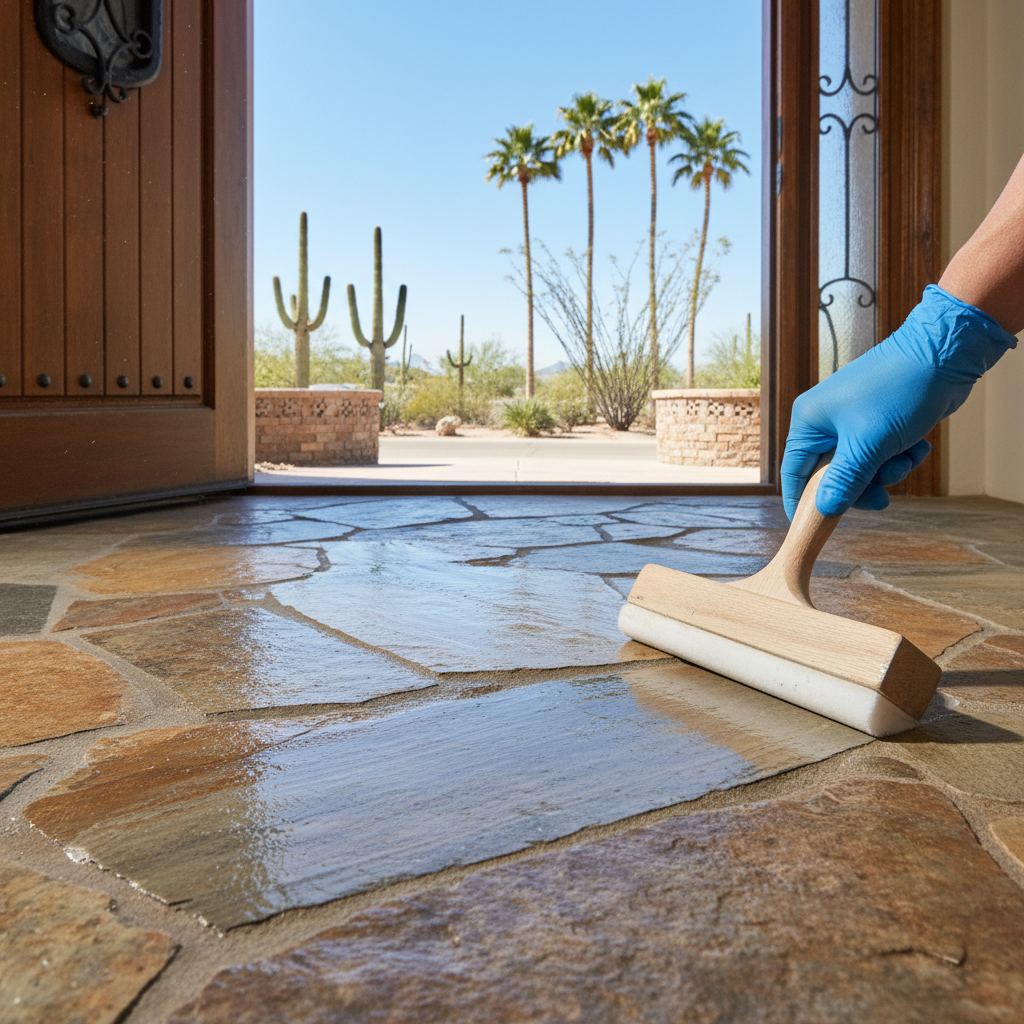
Sealing is the most important thing you can do to protect your natural stone floors. It's also the most commonly neglected.
A quality sealer fills the microscopic pores in natural stone, creating a barrier that prevents stains, moisture, and mineral deposits from penetrating the surface. Without it, every spill, every splash of Las Vegas tap water, and every wet footprint starts soaking into your stone immediately.
But sealing isn't one-size-fits-all. Different stones need different schedules. And living in Las Vegas — with our 278 ppm hard water and abrasive desert dust — means your stone needs sealing more frequently than generic national guidelines suggest.
Here's exactly how often to seal each type of natural stone, how to test whether your current sealer is still working, and what type of sealer to use.
The Quick Answer: Sealing Schedule by Stone Type
| Stone Type | Porosity | Las Vegas Sealing Frequency | National Average |
|---|---|---|---|
| Marble | Very High | Every 6-12 months | Every 6-12 months |
| Travertine | Very High | Every 1-2 years | Every 1-2 years |
| Limestone | Very High | Every 6-12 months | Every 1-2 years |
| Granite | Low-Medium | Every 1-2 years | Every 2-3 years |
| Slate | Medium | Every 1-2 years | Every 2-3 years |
| Terrazzo | Medium | Every 1-2 years | Every 2-3 years |
| Sandstone | Very High | Every 6-12 months | Every 1 year |
Note the difference: Las Vegas homes generally need sealing 6 to 12 months sooner than national guidelines recommend. Our hard water and desert conditions wear down sealers faster.
Adjust for Traffic and Location
The table above assumes moderate residential traffic. Adjust based on your situation:
Seal more often (reduce by 6 months) if:
- High foot traffic (entryways, kitchens, hallways)
- Wet areas (bathrooms, around pools, laundry rooms)
- No whole-house water softener
- Pets that track in outdoor grit
- Commercial setting with public foot traffic
Seal less often (add 6 months) if:
- Low-traffic rooms (guest bedrooms, formal dining rooms)
- Whole-house water softener installed
- Consistent maintenance routine (daily dust mopping, weekly pH-neutral cleaning)
- Climate-controlled environment with minimal moisture exposure
How to Test If Your Stone Needs Resealing
Don't guess. Test. The water drop test takes 30 seconds and tells you exactly whether your sealer is still protecting your stone.
The Water Drop Test
- Pick two or three spots on your stone floor — one in a high-traffic area, one in a moderate area, and one in a low-traffic area
- Sprinkle four or five drops of water on each spot
- Wait five to ten minutes
- Observe what happened:
| Result | What It Means | Action Needed |
|---|---|---|
| Water beads up and sits on surface | Sealer is intact and working | No action — check again in 6 months |
| Water slowly absorbs, stone slightly darkens after 10 min | Sealer is thinning | Plan to reseal within the next month |
| Water absorbs quickly, stone darkens within 5 min | Sealer has failed | Reseal as soon as possible |
| Water absorbs instantly | No sealer present | Seal immediately to prevent damage |
Run this test every six months on high-traffic areas and annually on the rest of your stone. It's the single best way to prevent the damage that comes from worn-out sealers — damage that costs far more to fix than the sealer itself.
The Oil Test (For Countertops)
For kitchen countertops where oil stains are a concern, you can also do an oil spot test:
- Place a drop of mineral oil on the stone surface
- Cover it with a small cup or piece of plastic wrap
- Wait 15 minutes
- Wipe the oil away
If the stone has darkened where the oil sat, your sealer isn't providing adequate protection against oil-based stains. Time to reseal.
Understanding Sealer Types
Not all sealers work the same way. Choosing the right type for your situation makes a significant difference in how long the protection lasts and how your stone looks.
Penetrating (Impregnating) Sealers
How they work: These sealers soak into the stone's pores and bond with the material below the surface. They don't sit on top of the stone — they become part of it.
Appearance: The stone looks exactly the same. No added sheen, no color change, no visible coating.
Longevity: Three to five years under normal conditions. In Las Vegas high-traffic areas, expect two to three years.
Best for: Indoor stone floors, bathroom tile, kitchen counters, anywhere you want protection without changing the stone's natural appearance.
This is what we recommend for most Las Vegas homes. Penetrating sealers offer the best combination of durability, invisible protection, and resistance to our hard water conditions.
Topical Sealers
How they work: These sit on the surface of the stone, creating a visible coating. Think of it like a clear coat on a car.
Appearance: Adds a sheen — either glossy or matte depending on the product. Can enhance the stone's color depth.
Longevity: One to three years. Wears fastest in high-traffic areas, creating uneven appearance as the coating thins.
Best for: Low-traffic decorative stone, accent walls, outdoor patios (with slip-resistant formula).
The drawback: Topical sealers can peel, flake, or turn cloudy over time, especially in areas with moisture. When they need reapplication, the old coating must be stripped first, which adds labor and cost.
Color-Enhancing Sealers
How they work: Similar to penetrating sealers but formulated to deepen and enrich the stone's natural color tones.
Appearance: The stone's colors look richer and more vibrant — like the stone looks when wet, but permanent.
Longevity: Two to four years.
Best for: Travertine or limestone that looks washed out or faded. Stone where you want to bring out the natural warmth without a topical coating.
Why Las Vegas Stone Needs More Frequent Sealing
Three factors specific to the Las Vegas Valley accelerate sealer breakdown:
Hard Water Assault
At 278 ppm, Las Vegas water carries heavy mineral loads. When this water contacts sealed stone, the minerals work at the sealer from the outside. When the sealer thins enough to allow water penetration, those minerals start building up inside the stone's pores — exactly where the sealer is supposed to protect.
This is why sealed stone in Las Vegas often looks like it needs attention before the national recommended timeline. The sealer is fighting a harder battle here than in cities with soft water.
UV and Heat Exposure
Las Vegas gets over 300 days of sunshine and summer temperatures regularly exceeding 110 degrees. For stone near windows, in sunrooms, or in outdoor installations, UV radiation breaks down sealer chemistry faster. Heat causes sealers to cure differently and can reduce their effective lifespan.
Outdoor stone in Las Vegas (patios, pool decks, walkways) should be sealed annually regardless of stone type.
Abrasive Dust
Desert dust tracked into the home creates micro-abrasion on sealed surfaces. While the dust itself doesn't dissolve sealers, the physical wear from foot traffic grinding fine grit into the surface accelerates the mechanical breakdown of both topical and penetrating sealers.
This is why daily dust mopping is so important — it's not just about keeping the floor clean, it's about protecting your sealer.
How to Seal Stone Floors (DIY Guide)
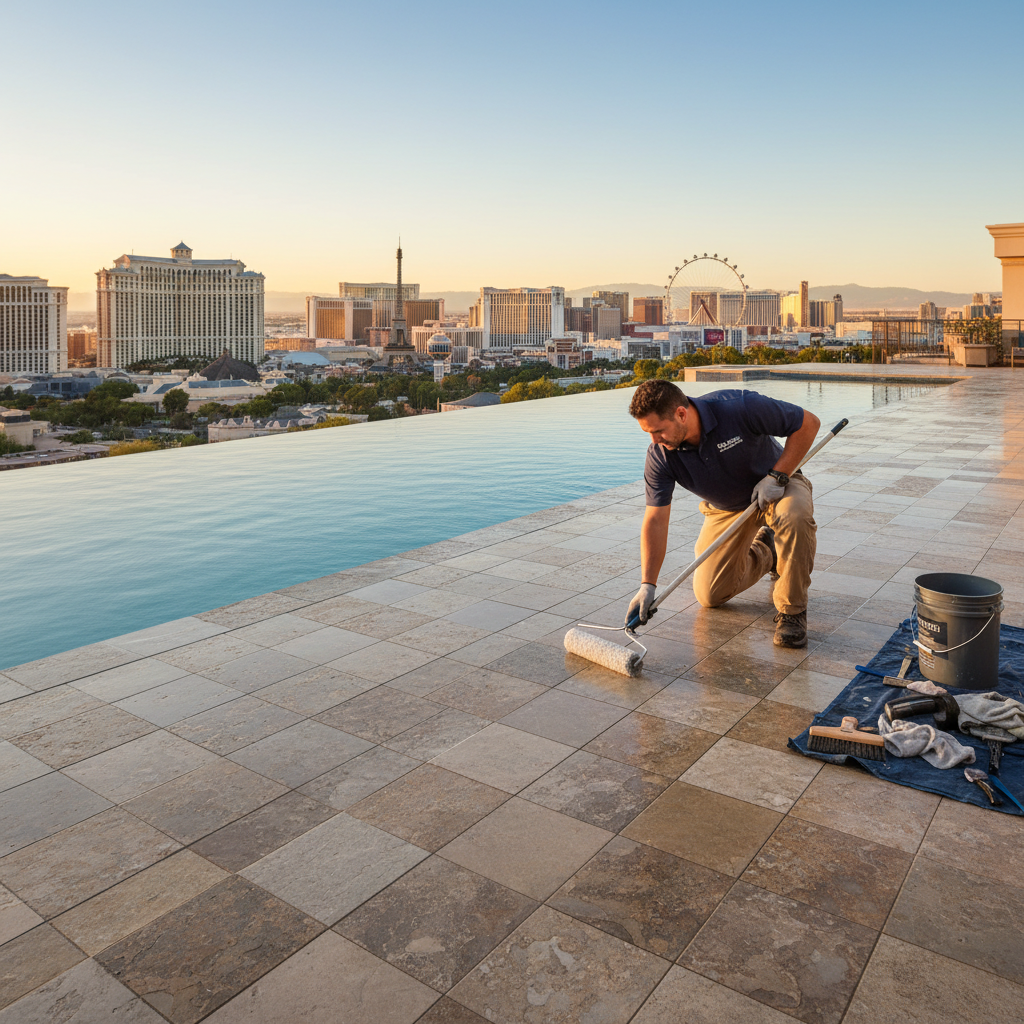
For a straightforward resealing of floors in good condition, DIY is a reasonable option.
What You Need
- Penetrating stone sealer (check label for your stone type)
- Clean microfiber cloths or a lamb's wool applicator
- pH-neutral stone cleaner
- Clean water for pre-cleaning
- Painter's tape (for protecting baseboards and adjacent surfaces)
The Process
1. Clean thoroughly: Mop the floor with a pH-neutral stone cleaner and let it dry completely. Any dirt left on the surface gets sealed in, so this step matters.
2. Test in an inconspicuous area: Apply a small amount of sealer in a hidden spot. Wait the recommended time and check that it looks right before doing the entire floor.
3. Apply the sealer: Working in small sections (three to four feet square), apply a thin, even coat of sealer using a microfiber cloth or applicator. Follow the product's direction of application.
4. Let it penetrate: Most penetrating sealers need 10 to 20 minutes to absorb into the stone. Don't let it pool or puddle.
5. Wipe excess: After the dwell time, wipe away any remaining sealer from the surface with a clean, dry microfiber cloth. Sealer left sitting on the surface can haze or become sticky.
6. Apply second coat (if recommended): Many sealers benefit from a second coat applied 30 to 60 minutes after the first. Check your product's instructions.
7. Allow cure time: Most sealers reach full protection in 24 to 72 hours. Avoid heavy traffic and water exposure during this time.
Common DIY Sealing Mistakes
Applying too much: More sealer doesn't mean more protection. Excess sealer that doesn't absorb will haze, cloud, or become sticky on the surface. Apply thin coats and wipe away excess.
Sealing dirty stone: If the stone isn't perfectly clean, you seal dirt and minerals into the surface. Clean thoroughly and let it dry completely first.
Not testing first: Some sealers can darken or slightly change the appearance of certain stones. Always test in a hidden area.
Skipping the second coat: For porous stones like marble, travertine, and limestone, a single coat often isn't enough. The first coat gets absorbed quickly, and the second coat provides the actual protective barrier.
Using the wrong sealer type: A sealer designed for granite may not provide adequate protection for marble. Check that the product is rated for your specific stone type.
When to Call a Professional
DIY sealing works well for maintenance resealing. But professional sealing is recommended when:
- First-time sealing: Getting the initial seal right sets the foundation for all future protection
- After restoration work: Freshly ground and polished stone needs professional-grade sealing to protect the investment
- Old sealer needs stripping: If the existing sealer has turned cloudy, is peeling, or was applied unevenly, it needs to be chemically stripped before resealing — a job best left to professionals
- Large areas: Professional equipment applies sealer more evenly and efficiently on large floor areas
- You want maximum longevity: Professional-grade sealers and application techniques typically outlast consumer products by one to two years
We include professional sealing with every stone restoration service and back it with a 30-day guarantee. If you're not satisfied with the sealer's performance within that window, we'll come back and reapply at no charge.
Stone Sealing FAQ
Does sealing make stone waterproof?
No. Sealing makes stone water-resistant, not waterproof. A properly sealed stone surface will repel water for a period of time, giving you a window to wipe up spills before they absorb. But standing water left on sealed stone for extended periods can still eventually penetrate. The sealer buys you time — it doesn't eliminate the need to clean up spills.
Can I seal stone myself?
Yes, for routine resealing of floors in good condition. Use a penetrating sealer rated for your stone type, clean the floor thoroughly first, and follow the product directions carefully. For first-time sealing, post-restoration sealing, or situations where old sealer needs stripping, professional application is recommended.
How do I know what type of stone I have?
If you're not sure, a stone restoration professional can identify your stone type during a free assessment. This matters because different stones have different porosities and react differently to sealers. Using the wrong sealer can result in poor protection or even damage. As a general rule: if it scratches easily with a coin and reacts to vinegar (fizzes), it's likely marble, travertine, or limestone.
Does granite need to be sealed?
Most granite benefits from sealing, though some very dense varieties are naturally resistant to staining. The water drop test is the best way to determine if your specific granite needs sealing. If water absorbs within 10 minutes, seal it. If it beads on the surface after 10 minutes, your granite may not need sealing, or its current sealer is still working.
Will sealing prevent etching on marble?
No. Etching is a chemical reaction between acid and calcium-based stone. Sealers protect against stains (absorption of colored liquids) but not etching (chemical damage from acids like vinegar, citrus, or wine). To prevent etching, you need to avoid acidic substances contacting the marble surface.
How much does professional stone sealing cost?
Professional stone sealing as a standalone service typically costs $0.50 to $2.00 per square foot depending on the stone type, condition, and whether old sealer needs stripping first. When included with a restoration service, sealing is usually bundled into the overall project cost. For a full overview of restoration pricing, see our stone restoration cost comparison guide.
Protect Your Investment
Your natural stone floors are one of the most valuable features in your home. Sealing is the cheapest, easiest, and most effective way to protect that investment — especially in Las Vegas, where our water and climate are harder on stone than almost anywhere else in the country.
Night and Day Stone Restoration provides professional sealing services across the Las Vegas Valley. We use professional-grade penetrating sealers and back every application with our 30-day guarantee.
Call (702) 809-8436 for a free stone assessment. We'll test your current sealer, evaluate your stone's condition, and recommend the right sealing schedule for your specific situation.
We serve Henderson, Summerlin, Centennial Hills, and the entire Las Vegas Valley.
Se habla espanol: (702) 764-1528