
Honed vs Polished Marble: Which Finish Is Right for Your Las Vegas Home?
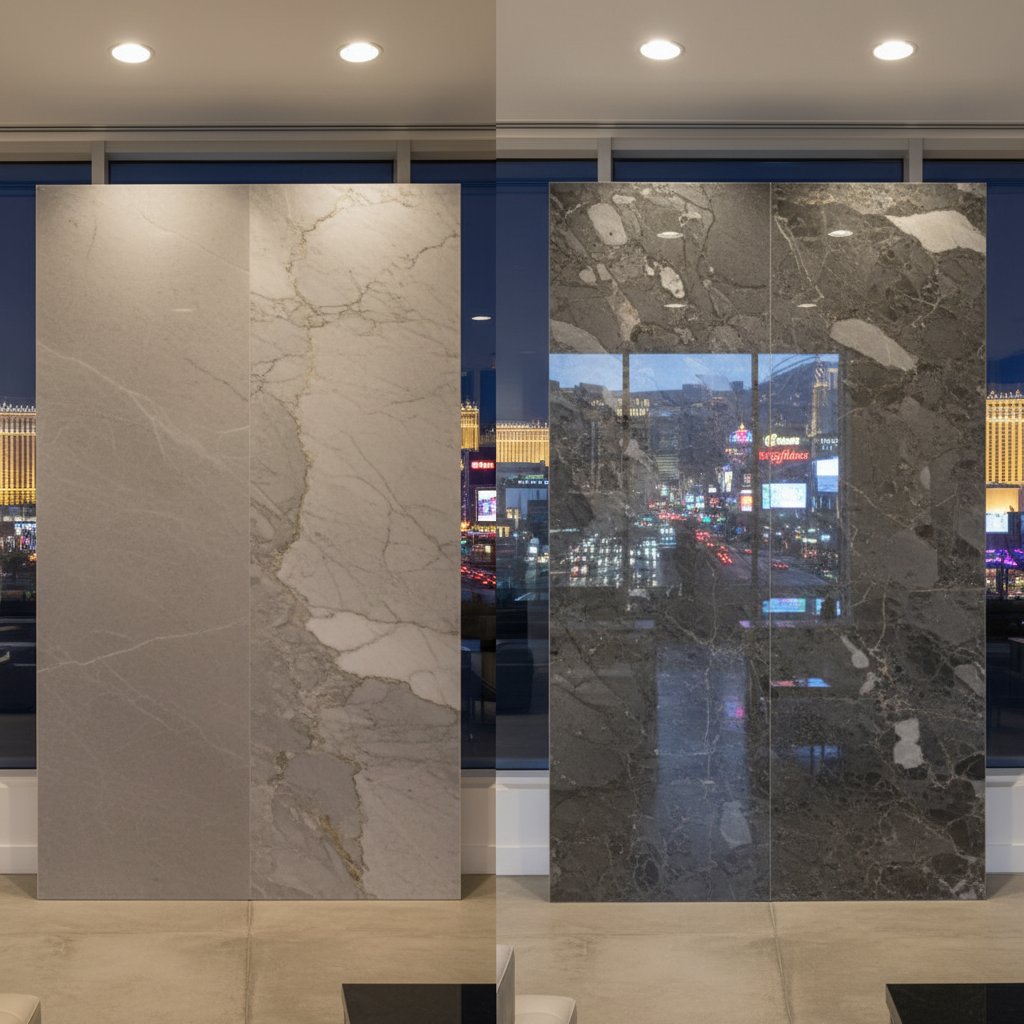
You've decided on marble. Great choice. But now comes a decision that will affect how your marble looks, feels, and performs every single day: honed or polished?
These aren't just aesthetic preferences. The finish you choose affects stain resistance, slip safety, scratch visibility, maintenance requirements, and how your marble handles Las Vegas hard water. Choose the wrong finish for the wrong room and you'll be frustrated. Choose the right one and your marble will look beautiful for decades.
Here's everything you need to know to make the right call.
The Quick Comparison
| Factor | Honed (Matte) | Polished (Glossy) |
|---|---|---|
| Appearance | Smooth, matte, velvet-like | Mirror-like, high-gloss shine |
| Stain resistance | Lower (more porous surface) | Higher (polishing closes pores) |
| Scratch visibility | Lower (scratches blend in) | Higher (scratches are obvious) |
| Slip resistance | Higher (safer when wet) | Lower (slippery when wet) |
| Etching visibility | Lower (etch marks less obvious) | Higher (etching creates dull spots on glossy surface) |
| Sealing frequency | More often (every 6 months) | Less often (every 6-12 months) |
| Maintenance effort | Moderate | Moderate-High |
| Light reflection | Minimal glare | Brightens rooms, can cause glare |
| Cost to install | Same | Same |
| Cost to restore | Slightly less | Slightly more (more polishing passes) |
Neither finish is objectively better. The right choice depends on where the marble is going, how much traffic it will see, and what matters most to you.
Understanding the Difference
What Is Honed Marble?
Honing is a finishing process that stops before the final polishing stage. The marble surface is ground smooth with diamond abrasives but not taken to the high-gloss level. The result is a soft, matte or satin finish with a subtle warmth.
Honed marble feels smooth to the touch — not rough or textured, just not reflective. Think of it as the difference between matte and glossy photo paper. Both are smooth, but the light interacts with them differently.
What Is Polished Marble?
Polished marble goes through additional polishing stages beyond honing. Progressively finer diamond abrasives create a surface smooth enough to reflect light like a mirror. This is the classic marble look you see in luxury hotels and high-end homes.
Polished marble has depth and luminosity. The stone's natural veining and color variations pop more dramatically in a polished finish because light penetrates the surface and reflects back through the translucent mineral layers.
Stain Resistance: Polished Wins
This surprises most people: polished marble is more stain-resistant than honed marble.
The polishing process physically closes the microscopic pores on the marble's surface. Fewer open pores means less opportunity for liquids to penetrate and stain the stone.
Honed marble, with its more open pore structure, absorbs liquids more readily. A wine spill on honed marble will penetrate faster than on polished marble, giving you less time to blot it up before staining occurs.
What this means in Las Vegas: Our hard water deposits minerals into marble pores. Polished marble's tighter surface slows this absorption, which means less hard water buildup between cleanings. However, the deposits that do form are more visible on a glossy surface.
Bottom line: If stain resistance is your top priority, polished marble has the edge. But both finishes need proper sealing regardless — sealing is what truly prevents stains.
Scratch Visibility: Honed Wins
Scratches are inevitable on marble floors. Foot traffic, furniture, desert grit tracked in on shoes — all of these create fine surface scratches over time.
On polished marble, scratches are highly visible. They appear as dull lines against the glossy surface, and they catch light in a way that draws the eye. A single scratch on polished marble can be noticeable from across the room.
On honed marble, the same scratches blend into the matte surface. They're still there, but the lack of gloss contrast makes them far less noticeable. This is why honed marble tends to look better for longer between professional restorations.
What this means in Las Vegas: Desert dust is mildly abrasive. In Las Vegas homes, fine scratches from tracked-in grit accumulate faster than in humid climates. Honed marble handles this better visually, while polished marble may need more frequent professional polishing to maintain its look.
Slip Resistance: Honed Wins
This is a safety consideration, not just an aesthetic one.
Polished marble becomes slippery when wet. In a bathroom, near a pool, or in an entryway where wet shoes are common, polished marble floors create a genuine slip hazard.
Honed marble provides significantly more traction when wet. The matte surface creates enough friction to reduce slip risk substantially.
What this means in Las Vegas: If you're choosing marble for bathroom floors, shower surrounds, pool deck areas, or entryways, honed is the safer choice. For dry living areas and bedrooms, this factor is less important.
Etching: Honed Hides It Better
Etching is the dull, rough mark left when acidic substances contact marble. Wine, citrus juice, vinegar, tomato sauce, and many cleaning products cause etching on both honed and polished marble.
The chemistry is the same on both finishes — acid reacts with the calcium carbonate in marble, dissolving a thin layer of the surface.
The difference is visibility. On polished marble, etch marks create an obvious dull spot against the glossy surface. On honed marble, etch marks are much less noticeable because there's less contrast between the etched area and the surrounding matte surface.
What this means for kitchens: Kitchen countertops and floors near cooking areas see frequent acidic spills. Honed marble in the kitchen shows etching less and may be more forgiving of the inevitable lemon juice splash or wine drip.
Room-by-Room Recommendations
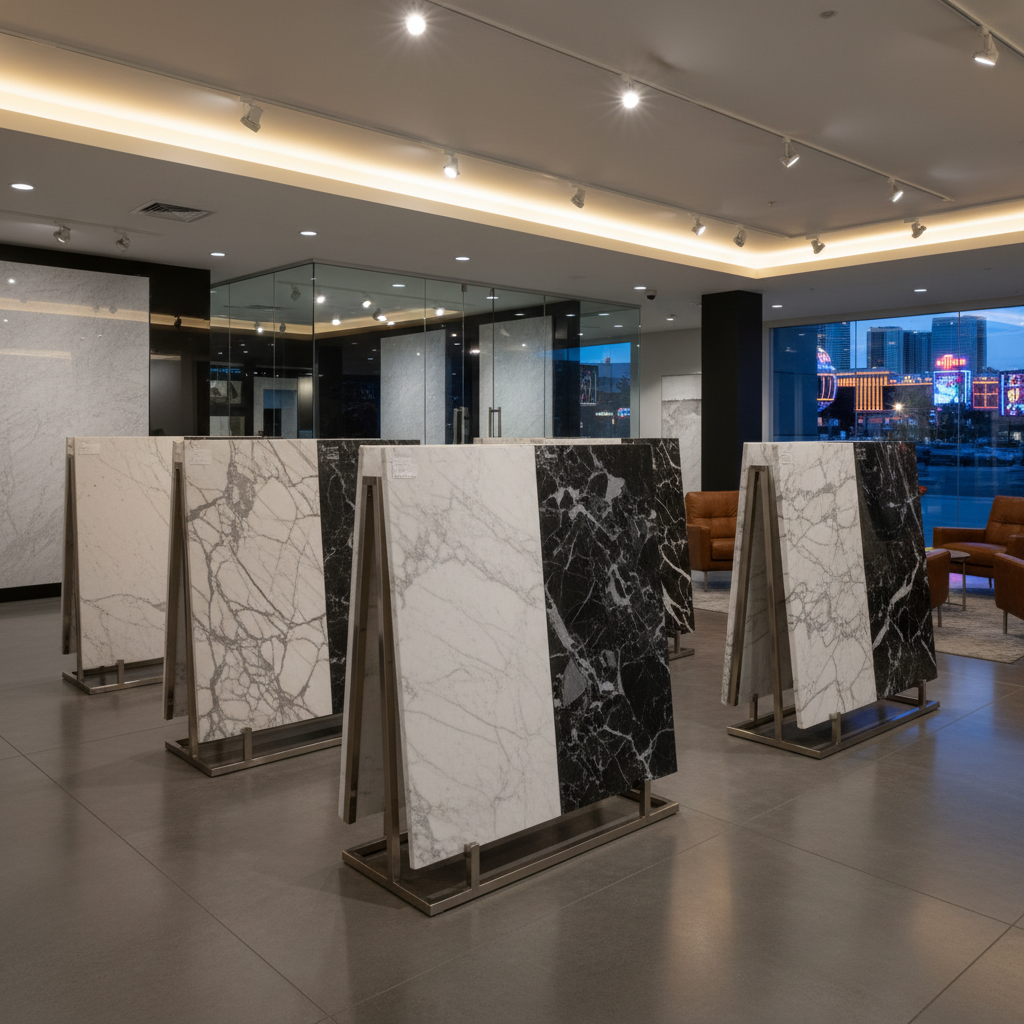
Kitchen Floors
Recommended: Honed
- High traffic and spill risk
- Acidic food and drink exposure (etching)
- Desert grit tracked in from adjacent rooms
- Honed hides scratches and etching better
Kitchen Countertops
Recommended: Honed
- Constant food preparation with acidic ingredients
- Heavy daily use creates wear patterns
- Honed surface is more forgiving of everyday kitchen life
- Polished is also workable if you seal diligently and use cutting boards
Bathroom Floors
Recommended: Honed
- Wet surfaces need slip resistance for safety
- Hard water exposure from showers and sinks
- Honed handles moisture contact better visually
Bathroom Vanity Tops
Recommended: Either (personal preference)
- Lower traffic than kitchen counters
- Polished adds a luxury feel to the bathroom
- Honed is more practical for daily use
- Soap and hard water are the main concerns regardless of finish
Living Room Floors
Recommended: Polished
- Lower spill risk
- Light reflection brightens the space
- Polished finish showcases marble's natural beauty
- The drama of polished marble is best appreciated in entertaining spaces
Entryway / Foyer
Recommended: Honed
- First point of contact for desert grit on shoes
- May get wet from rain or tracked-in moisture
- High traffic area
- Honed hides the inevitable wear better
Master Bedroom
Recommended: Either (personal preference)
- Low traffic
- Minimal spill risk
- Polished for luxury feel, honed for a softer, warmer look
Outdoor Patios
Recommended: Honed
- Must have slip resistance when wet
- UV exposure can affect polished finishes over time
- Outdoor dust and debris create more surface wear
- Honed is the practical and safe choice for outdoor marble
Maintenance Comparison in Las Vegas
Honed Marble Maintenance
Sealing: Every 6 months in high-use areas, annually elsewhere. Honed marble's more open pore structure requires more frequent sealing to maintain protection. This is especially important in Las Vegas where hard water accelerates mineral absorption.
Daily care: Dust mop to remove desert grit. This is critical for honed marble because the open pores can trap fine particles.
Cleaning: Weekly damp mopping with a pH-neutral stone cleaner. Dry after mopping to prevent hard water deposits.
Professional restoration: Every 2 to 4 years. Honed marble restoration is slightly less expensive than polished because fewer polishing passes are needed.
Polished Marble Maintenance
Sealing: Every 6 to 12 months. Polished marble's tighter surface holds sealer better and needs resealing less frequently.
Daily care: Dust mop to remove grit. On polished marble, even fine dust causes visible micro-scratches over time.
Cleaning: Weekly damp mopping with a pH-neutral stone cleaner. Water spots from hard water are more visible on polished marble, so drying after mopping is important.
Professional restoration: Every 1 to 3 years. Polished marble shows wear more quickly, and restoring the high-gloss finish requires additional polishing passes compared to honing. See our marble floor polishing cost guide for detailed pricing.
Cost Comparison
The marble itself costs the same regardless of finish — honed and polished are the same stone, just finished differently.
| Cost Factor | Honed | Polished |
|---|---|---|
| Material cost | Same | Same |
| Installation cost | Same | Same |
| Sealer cost (annual) | Slightly higher (more frequent) | Slightly lower |
| Professional restoration | $3-$12/sqft | $3-$15/sqft |
| Restoration frequency | Every 2-4 years | Every 1-3 years |
Over a 10-year period, polished marble may cost slightly more in maintenance due to more frequent professional polishing, while honed marble costs slightly more in sealer. The overall lifetime cost difference is minimal.
Can You Change Your Mind Later?
Yes. Polished marble can be honed, and honed marble can be polished. A professional stone restoration company can change the finish of your existing marble.
Polished to honed: The polished surface is diamond-honed to create a matte finish. This is a straightforward process.
Honed to polished: The honed surface goes through additional polishing stages to achieve a high-gloss finish. This takes more time and costs slightly more than going the other direction.
If you're unsure which finish you prefer, this flexibility means you're not locked in forever. You can always have a professional change the finish during a future restoration service.
The Las Vegas Factor
Living in Las Vegas adds specific considerations to the honed vs polished decision:
Hard water favors honed: Mineral deposits are less visible on matte surfaces. If you don't have a water softener, honed marble will look better between cleanings.
Desert dust favors honed: Fine scratches from tracked-in grit are less noticeable on honed surfaces. This is especially relevant for entryways and high-traffic paths.
Desert aesthetic favors either: The warm, earthy tones of honed marble complement Southwest desert architecture beautifully. But the dramatic elegance of polished marble in a contemporary Las Vegas home is equally stunning.
Our recommendation: For most Las Vegas homes, we suggest honed for floors and polished for countertops and accent surfaces. This gives you the practical benefits of honed where it matters most (durability, safety, hard water tolerance) and the visual drama of polished where you'll appreciate it (kitchens, bathrooms, entertaining spaces).
Honed vs Polished Granite
The honed vs polished decision applies to granite floors and countertops as well — and the tradeoffs are similar, with a few key differences specific to granite's harder, denser composition.
| Factor | Honed Granite | Polished Granite |
|---|---|---|
| Appearance | Soft, matte, contemporary | Mirror-like, dramatic shine |
| Stain resistance | Lower (more porous) | Higher (tighter surface) |
| Scratch visibility | Lower (blends into matte) | Higher (catches light) |
| Acid sensitivity | Very low (granite is silicate) | Very low (granite resists etching) |
| Sealing needed | Yes (annually) | Yes (every 1-2 years) |
| Slip resistance | Higher | Lower when wet |
| Restoration cost | $3-$10/sqft | $4-$12/sqft |
Key Difference: Granite Doesn't Etch
Unlike marble, granite's silicate-based composition doesn't react to acids. Lemon juice, wine, and vinegar won't etch granite the way they etch marble. This changes the calculus slightly: the main reasons to choose honed granite are scratch-hiding and slip resistance — not etching tolerance. The main reason to choose polished granite is superior stain resistance and the dramatic mirror-like appearance.
Honed Granite in Las Vegas
Honed granite has become increasingly popular in contemporary Las Vegas kitchen designs. The matte finish pairs well with modern cabinetry and doesn't show Las Vegas hard water water spots as visibly as polished granite. For floor applications, honed granite's grip makes it a safer choice in wet areas. For countertops, honed granite requires more diligent sealing because the open pore surface absorbs oils from food preparation more readily. Our granite polishing and restoration service handles both honed and polished finishes, and we can convert your existing granite from one finish to the other during any restoration visit.
Frequently Asked Questions
Is honed marble more expensive than polished?
No. The marble itself costs the same. Installation is the same. The small differences in maintenance cost (honed needs more frequent sealing, polished needs more frequent professional polishing) roughly even out over time.
Does honed marble stain more easily?
Yes. Honed marble has a more open pore structure, which means it absorbs liquids faster than polished marble. Proper sealing significantly reduces this difference, but polished marble is inherently more stain-resistant due to its closed surface.
Is polished marble slippery?
Yes, especially when wet. Polished marble floors are not recommended for bathrooms, pool areas, or other wet environments. Honed marble provides significantly better traction when wet.
Can you polish honed marble floors?
Yes. A professional stone restoration company can take honed marble through the additional polishing stages to achieve a high-gloss finish. This can be done at any time — you're not locked into the original finish choice.
Which finish is better for Las Vegas kitchens?
Honed is generally more practical for Las Vegas kitchen floors due to hard water exposure, foot traffic, and acidic spill risk. For kitchen countertops, both work well — honed is more forgiving of daily use, while polished is more stain-resistant with proper sealing.
How do I maintain honed marble in Las Vegas?
Seal every six months in high-use areas. Dust mop daily to remove desert grit. Damp mop weekly with a pH-neutral stone cleaner and dry afterward to prevent hard water deposits. Schedule professional restoration every two to four years.
Need Help Deciding?
If you're choosing a finish for new marble or thinking about changing the finish on your existing marble, we're happy to help. Night and Day Stone Restoration has been working with marble in Las Vegas homes for over 20 years. We can show you examples of both finishes and help you choose what works best for your space and lifestyle.
Already have marble that needs restoration? Our marble polishing and restoration services cover both finishes — honed or polished — and have your floors looking beautiful in one to two days.
Call (702) 809-8436 for a free consultation. We serve Henderson, Summerlin, and the entire Las Vegas Valley.
Se habla espanol: (702) 764-1528